
Specification and sampling controls
The service path converts an application requirement into material fields, sample stages, testing context and a release record. Each decision is attached to the proposed fiber, construction, finish and order scope.
Service matrix
The table distinguishes information supplied by the buyer from information that must be confirmed on a sample, report or order document.
| Service stage | Required input | Controlled output | Boundary |
|---|---|---|---|
| Application definition | Hazard, assembly, exposure, maintenance, market | Material requirement record | No performance assumed from trade name |
| Construction screen | Fiber content, weave or nonwoven route, GSM, usable width | Comparable shortlist | Ranges remain provisional until article confirmation |
| Sample planning | Color, finish, coating, backing, conversion method | Named sample and approval stage | Lab dip does not approve bulk construction |
| Evidence review | Test method, specimen assembly, conditioning, acceptance criterion | Report-scope checklist | Result applies only to the reported specimen |
| Order release | Quantity, tolerance, inspection plan, delivery terms | Lot-linked release record | Changes require documented re-evaluation |
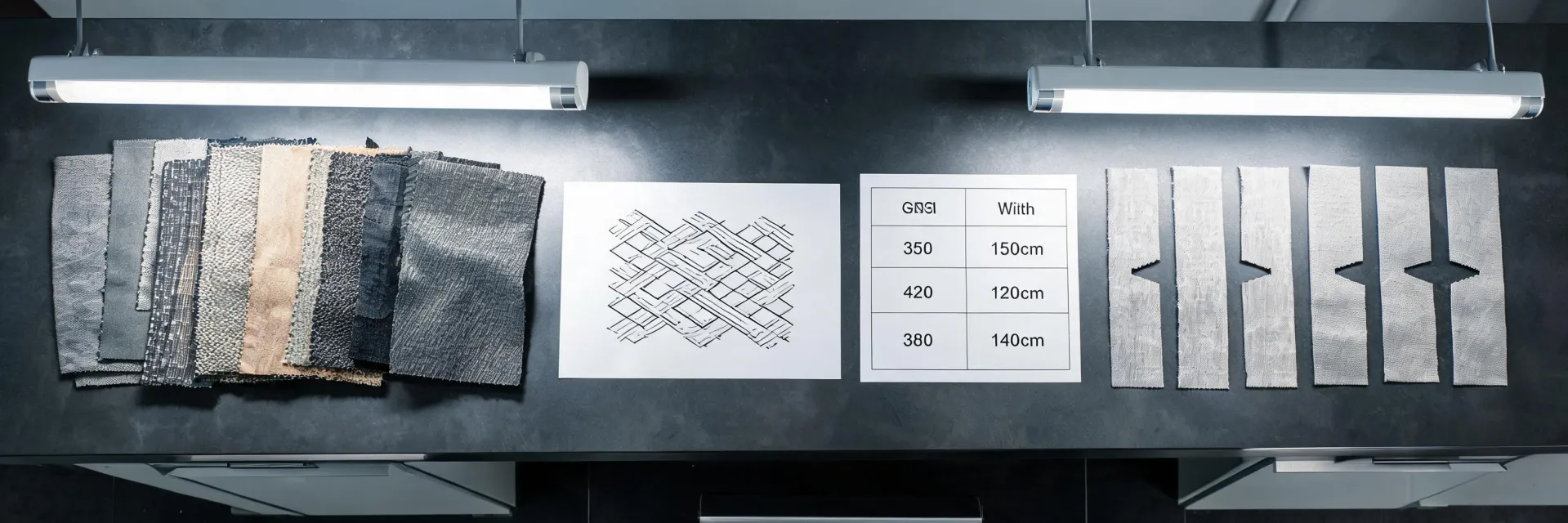
Parameters such as 180 g/m2 or 150 cm are examples of complete units, not published values for every Dupont material.
Methodology
Describe the protective function, contact hazard, temperature, moisture, chemical exposure, expected wear, laundering or maintenance and the construction in which the textile will be used. A broad label such as industrial fabric is not sufficient.
Record fiber identity, yarn form, linear density or denier, warp and weft construction, GSM, usable width, coating weight and finish where applicable. Unknown fields remain open and are not replaced by assumptions.
A yarn package supports conversion trials, a handloom supports construction review, a lab dip supports color direction, and a production lot supports final receipt comparison. The approval record names which question the sample answered.
Tensile strength, tear strength, Martindale abrasion, air permeability, hydrostatic head or limited flame spread is paired with the named method, conditioning, test direction, specimen assembly and result scope.
The order reference connects the approved construction, shade or finish, inspection notes and available documentation. A supplier, finish, backing or test-scope change is treated as a new decision point.
Provide the operating condition, material fields, requested test method, quantity and delivery destination. The response will identify missing inputs and the sample stage needed next.